

His Story Begins Here
Meet the Man Who Changed the World
For more than two thousand years, one man has shaped history unlike anyone else.
His teachings have influenced nations. His words continue to be read around the world every day. Artists have painted Him. Musicians have written songs about Him. Movies have been made about His life. More books have been written about Him than any other person in history. Countless people have claimed that meeting Him changed their lives forever.
His name is Jesus.
What many people don't realize is that the story of Jesus begins long before His birth. Along the way, you'll meet generations of people who were waiting for the one God had promised to send.
Perhaps you've heard about Him your whole life. Perhaps you know very little. Maybe you've wondered what all the attention is about—or don't have much of an opinion at all. Whatever your background, you're invited to discover His story for yourself.
Where Does This Story Come From?
The story you're about to discover comes from a remarkable collection of ancient writings known as the Bible. Written over many centuries by different authors, these writings tell one continuous story—a story that begins long before Jesus was born and unfolds across generations.
For thousands of years, people have read these writings to understand who God is, why we're here, and what gives life meaning. These writings have influenced civilizations, shaped cultures, inspired countless works of art and music, and continue to impact millions of lives around the world today.
Whether these stories are familiar or completely new to you, I simply invite you to keep an open mind as we discover them together.
Note: This story is based on the biblical account. Historical settings and everyday details have been included to help readers visualize the biblical world while every effort has been made to remain faithful to what Scripture records.
Let's begin His story.

Before there were cities...
Before there were nations...
Before there was history as we know it...
There was a perfect beginning.
The Bible begins with God creating a world unlike anything we have ever known—a world filled with life, beauty, purpose, and perfect harmony.
At the center of His creation was the first man and woman—Adam and Eve—whom He created in His own image. God placed them in a beautiful garden where they enjoyed peace with one another, cared for His creation, and walked in fellowship with Him. There was no fear or shame, no pain or suffering, and no death. Everything was exactly as God intended it to be.
This is how life was meant to be.
But it wouldn't stay that way.
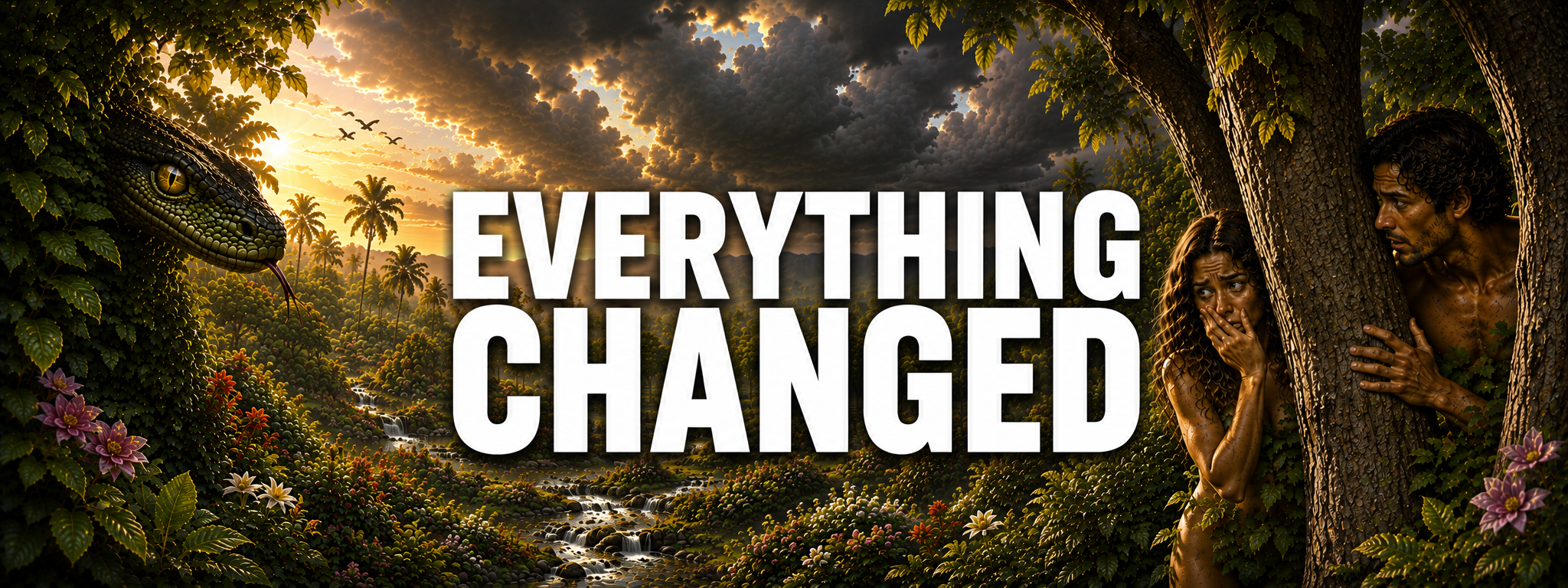
Satan, appearing in the form of a serpent, tempted Adam and Eve to question God's goodness. He convinced them that God was withholding something good. He claimed they would become like God if they ate the forbidden fruit. Believing his lies, they chose to disobey God.
God had given Adam and Eve everything they needed, asking only one thing of them: not to eat from one particular tree.
Then one day, everything changed.
The effects of that choice reached far beyond the Garden of Eden. Brokenness entered the human story, touching every generation that followed. We still see its effects today—in our relationships, our families, our communities, and even within ourselves.
From that moment on, the world was no longer the way it had been in the beginning.
But God wasn't finished with His story.
In that moment, everything changed. Fear replaced innocence. Shame entered where there had once been openness, and the close relationship they shared with God was no longer the same.

Even after Adam and Eve disobeyed Him, God did not abandon them.
Instead, God made a promise. One day, someone would come to defeat evil and restore what sin had broken. Although that day was still far away, God's plan to rescue humanity had already begun.
Through every generation, God faithfully worked through people who trusted Him. Many were ordinary men and women, yet God used them in extraordinary ways. One life, one family, and one generation at a time, He unfolded the story that would one day lead to Jesus.
Ready to meet some of them?
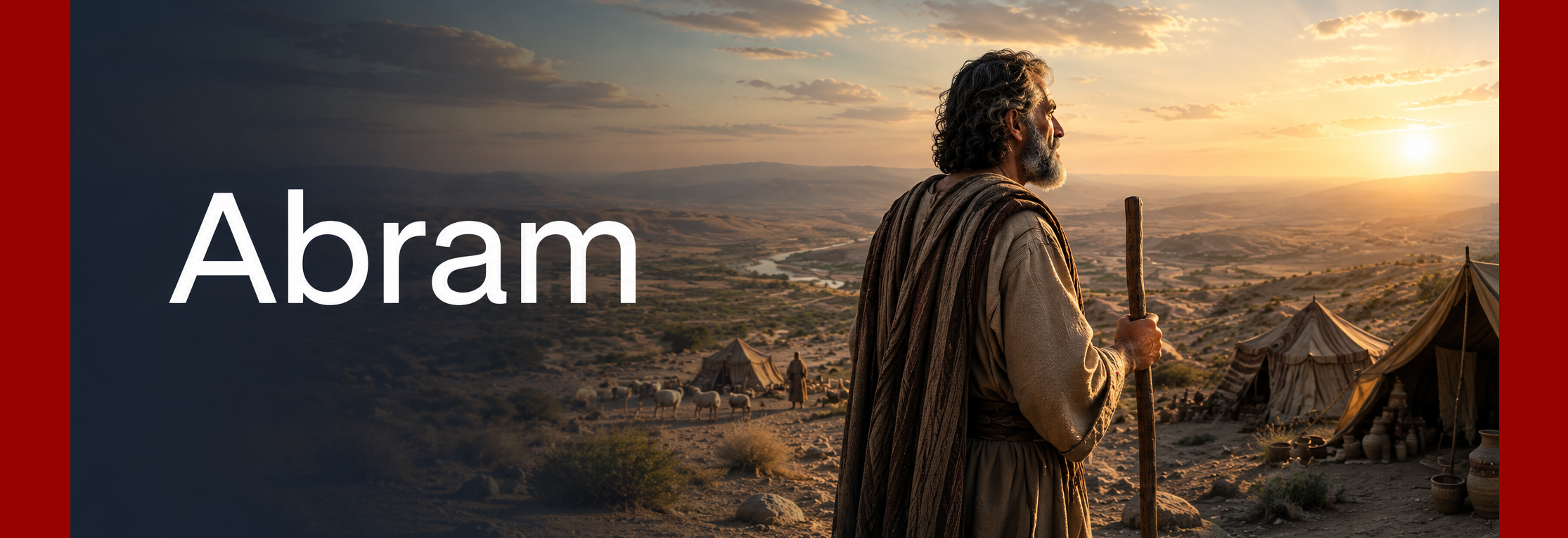
Imagine living during the time of Abram.
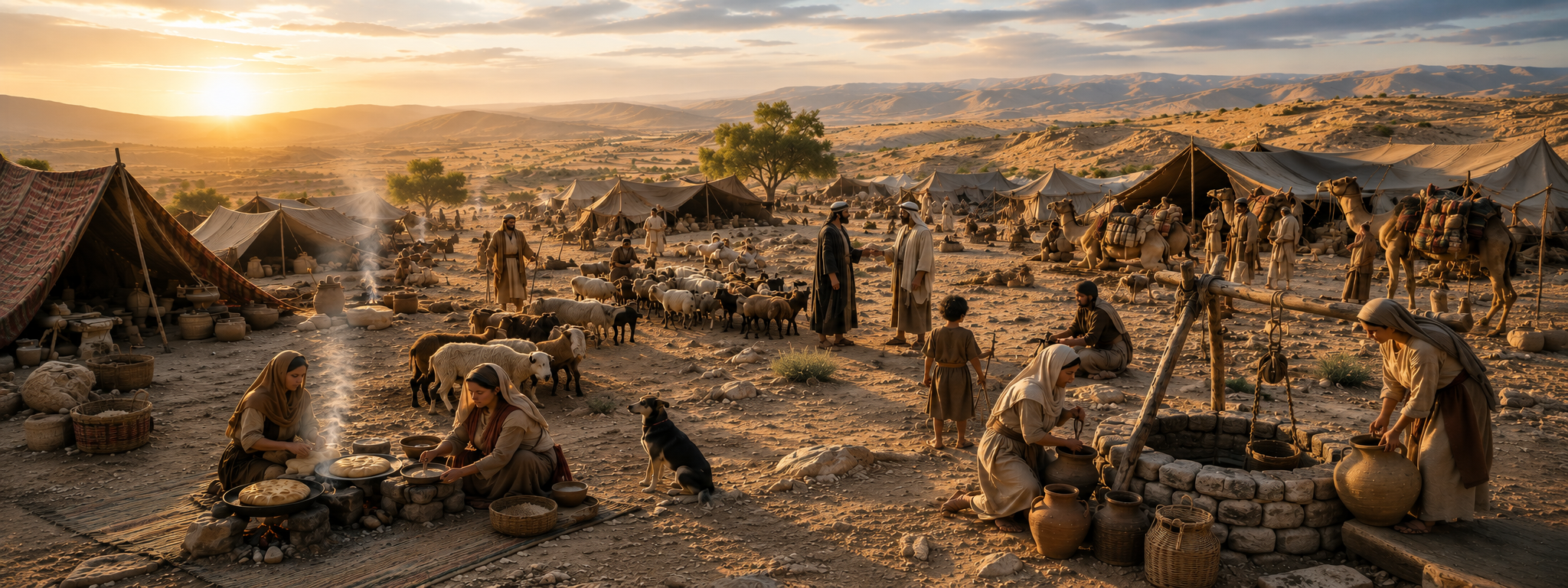
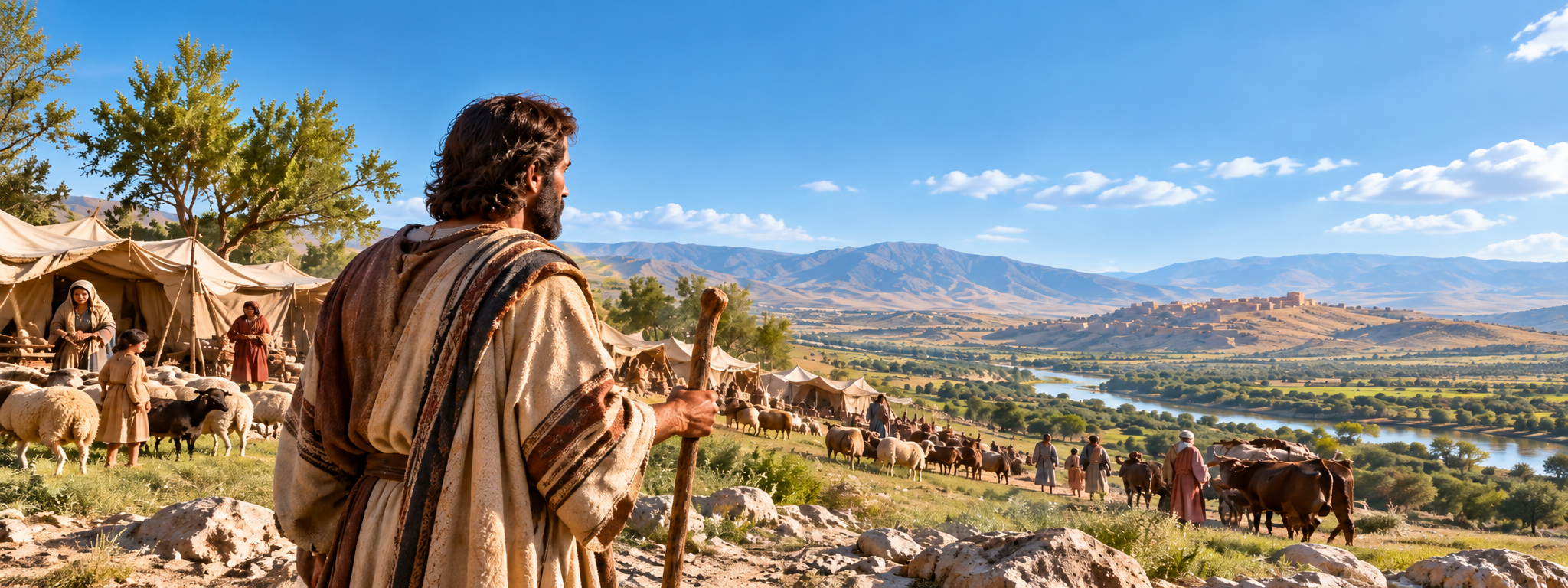
The sun is just beginning to rise over the hills as another ordinary day begins. Shepherds gather their flocks. Servants prepare the morning meal. Families awaken inside their tents, expecting another day much like the one before.
No one realizes history is about to change.
Among the people beginning their day is a man named Abram.
Abram wasn't a king who ruled from a palace or a military leader commanding armies. He lived in tents with his household, moving from place to place as his flocks and herds searched for fresh grazing land. Wherever they settled, the camp soon came alive as another ordinary day began.
As head of his household, Abram carried great responsibility. His family and servants looked to him for leadership, and over the years God had blessed him with great wealth in livestock and possessions. By every outward measure, he was a prosperous man.
Yet beneath the activity of daily life was a quiet sorrow that neither wealth nor success could erase.
Abram and his wife, Sarai, had no children.
Year after year they watched other families welcome sons and daughters into the world. They celebrated with them, shared in their joy, and then returned to their own tent, where the silence served as a constant reminder of what they longed for but did not have. As the years passed, the hope of having a child became harder to hold on to, until it seemed that their opportunity had slipped quietly into the past.
Still, life continued. Each morning the sun rose over the hills. The camp awakened. Work began. Another ordinary day unfolded—until one day, everything about Abram's life was about to take a direction he could never have imagined.
But God had different plans.
AN ORDINARY LIFE
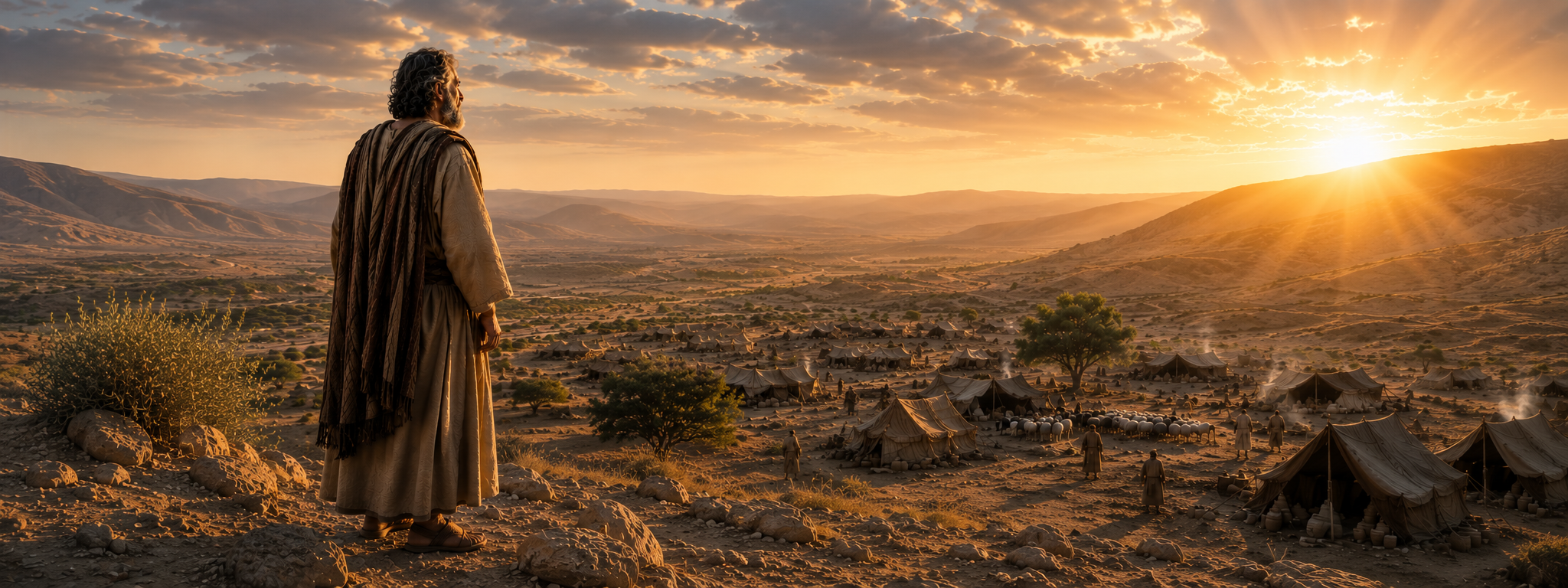
GOD CALLS ABRAM
The morning unfolded much as it always had. People moved throughout the camp, tending to the responsibilities of another day. Shepherds led their flocks toward fresh grazing land. Servants carried water and prepared the midday meal. Before long, the familiar sounds of everyday life filled the valley once again.
Then God spoke to Abram.
God told him to leave his country, his relatives, and his father's household and go to a land He would show him. Abram wasn't given a map or told exactly where the journey would lead. He was simply being asked to leave the life he knew and trust God to lead him.
But with that call came an extraordinary promise.
God promised to make Abram into a great nation, to bless him and make his name great. And then came a promise far greater than Abram could have understood at the time: through him, all the families of the earth would be blessed.
There was just one problem.
Abram and Sarai had no children.
How could a childless man become the father of a great nation? How could families throughout the earth someday be blessed through a family that didn't yet exist?
Abram couldn't see how God would accomplish any of it.
But he trusted the God who made the promise. And he went.
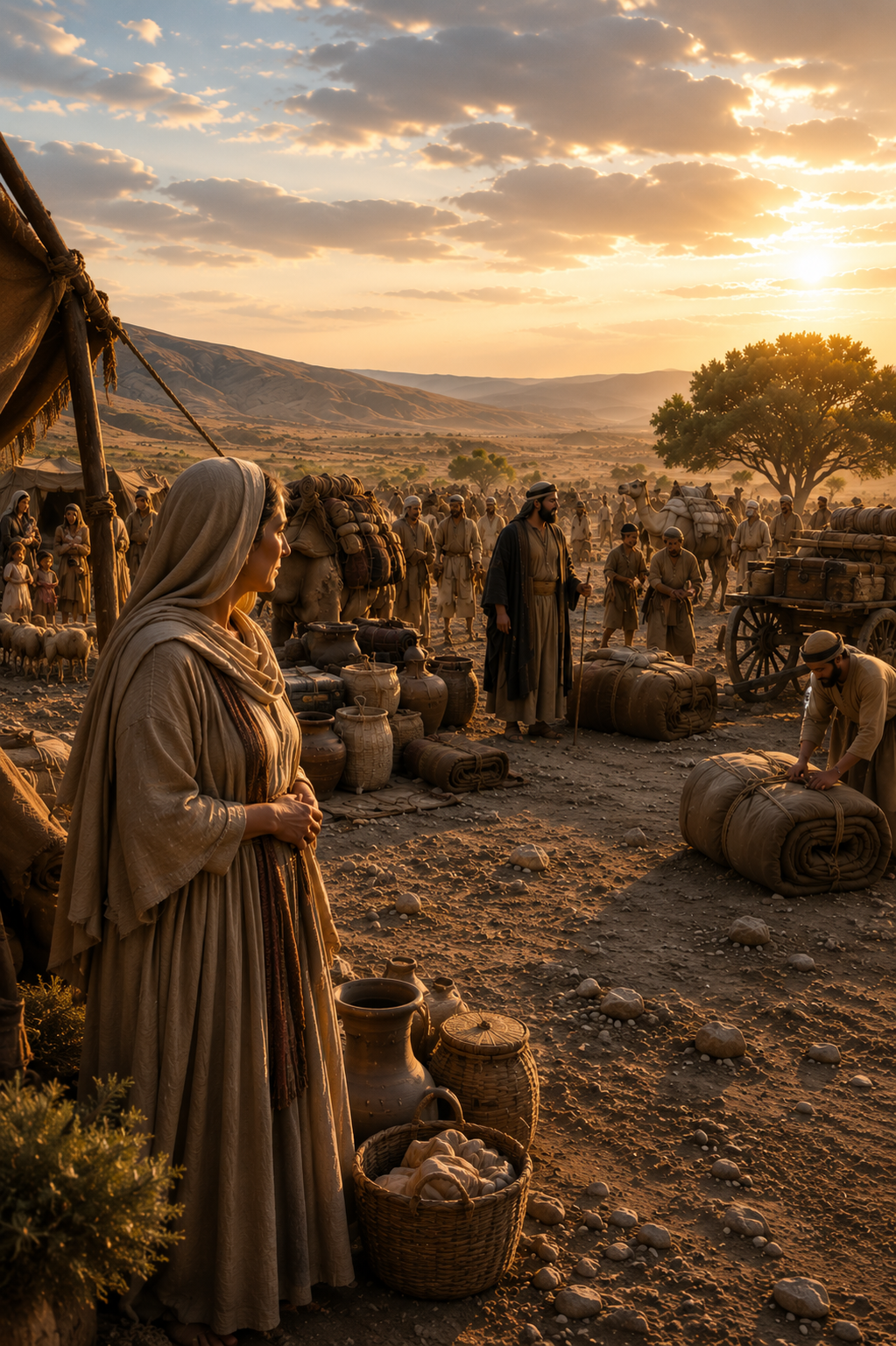
The camp that had stood quietly across the valley suddenly came alive with a different kind of activity. Servants rolled up heavy tents that had sheltered the household for years. Cooking utensils, woven baskets, water jars, and belongings were carefully packed onto camels. Shepherds gathered the flocks while families prepared for a journey whose destination they did not yet know.
Sarai watched as the life they had built was slowly taken apart. The familiar camp disappeared piece by piece until only bundles, loaded animals, and the people who would travel together remained.
As the caravan began to move, Abram left behind everything familiar. Every step carried him farther from the life he had always known and closer to the future God had promised.
The journey was not always easy. There were moments when Abram trusted God, and there were moments when fear led him to make poor decisions. At times he struggled to understand how God's promises could ever come true, especially as the years passed and he and Sarai still had no child.
Yet God remained faithful.
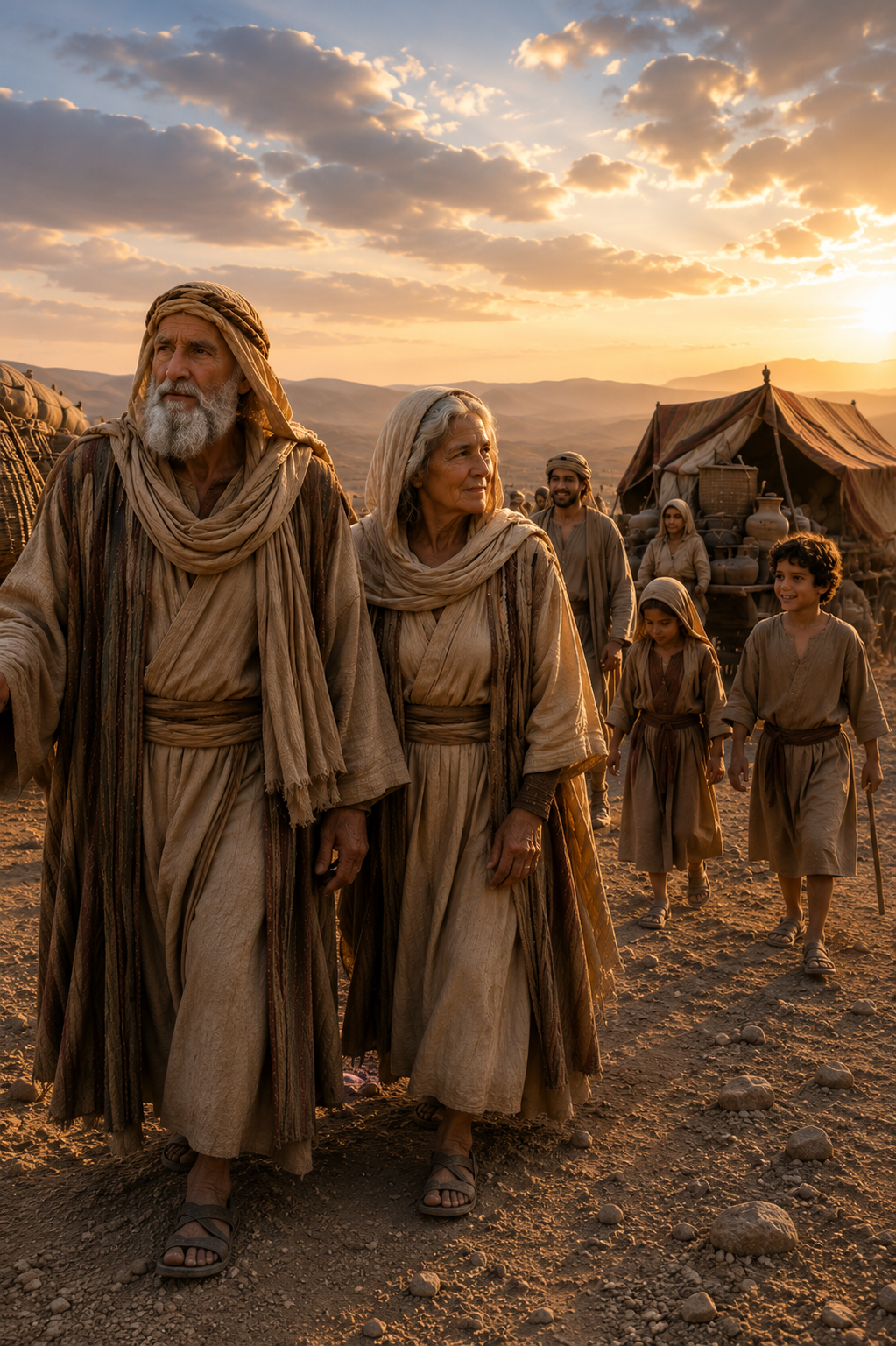
God's Promise Was About to Be Fulfilled
Nearly twenty-five years had passed since God first called Abram to leave his homeland. Abram was now ninety-nine years old, and Sarai was ninety. By every human measure, the opportunity to have a child had passed.
Then God spoke to Abram once again.
He gave Abram a new name—Abraham, meaning "father of many nations." Sarai also received a new name—Sarah, meaning "princess." Their new names were a reminder that God had not forgotten His promise. In fact, He revealed something even more remarkable:
Sarah herself would bear the son God had promised, and it would happen within the coming year.
The promise seemed impossible. Abraham laughed at the thought that a man nearly one hundred years old and a woman long past childbearing could become parents. Sarah overheard the same promise and she laughed, too. It simply seemed beyond belief.
But God asked a question that neither of them would ever forget:
"Is anything too hard for the LORD?"
Then, just as God had promised, Sarah gave birth to a son. They named him Isaac.
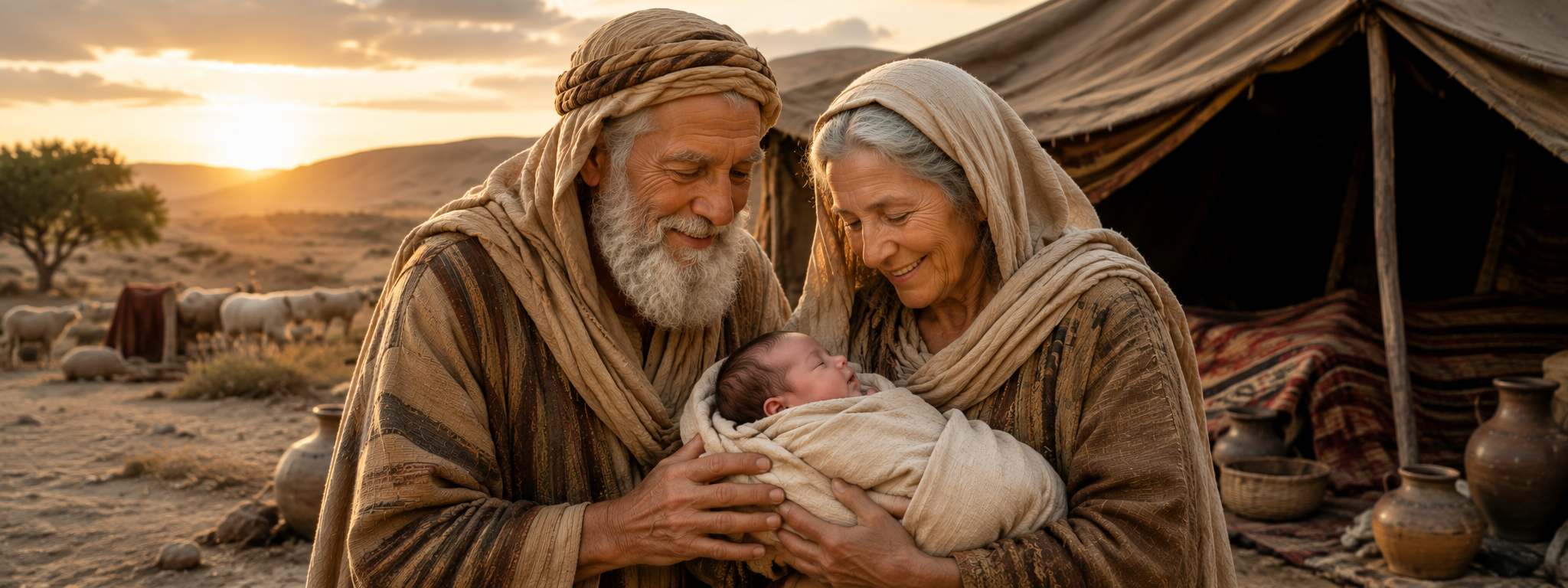
As Isaac grew, he married Rebekah. But as the years passed, they had no children. Isaac prayed to God for his wife, and God answered his prayer.
After twenty years of marriage, Rebekah became pregnant—with twins.
Even before the boys were born, God told Rebekah that two nations were within her. One people would be stronger than the other, and the older would serve the younger.
When the time came for the babies to be born, Esau came first, red and covered with hair. Then came his brother, Jacob, with his hand grasping Esau's heel.
The family God had promised Abraham was growing.
But the generations ahead would face famine, slavery, war, exile, and powerful kingdoms determined to conquer them. Again and again, their future would seem uncertain.
And again and again, God would act.

ISRAEL GETS ITS NAME
The twin brothers grew up very differently. Esau became a skillful hunter, a man of the open country, while Jacob was a quiet man who stayed among the tents.
As the firstborn son, Esau possessed the birthright—a privileged place in the family that included a greater share of his father's inheritance and the responsibilities that came with being the firstborn.
One day, Jacob was cooking a pot of stew when Esau returned from the open country exhausted and hungry. Esau asked his brother for some of the stew.
But Jacob wanted something in return.
“First sell me your birthright.”
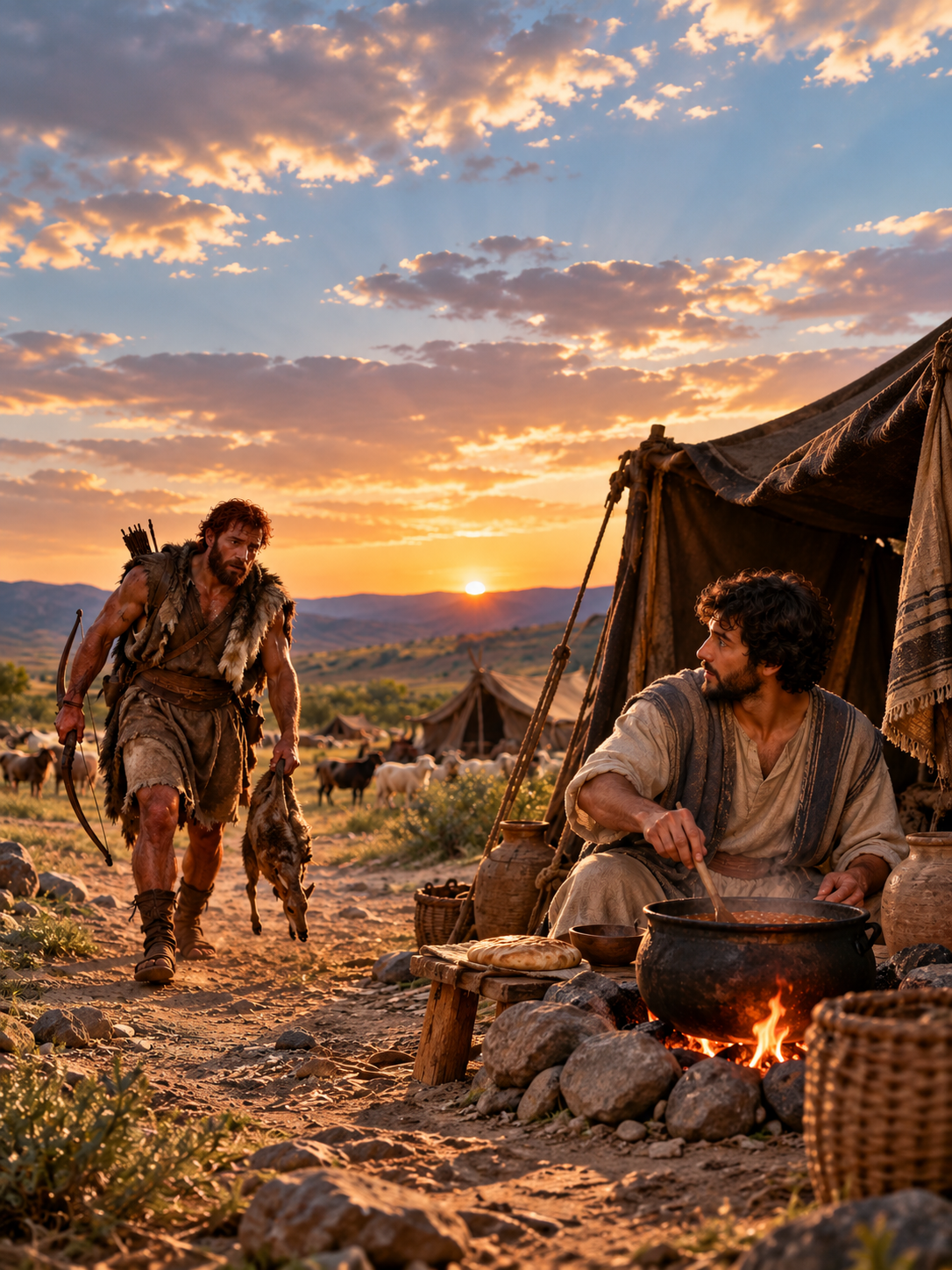
Esau agreed. He swore an oath to Jacob, giving up his birthright in exchange for bread and a bowl of lentil stew. He ate and drank, then got up and went on his way.
Esau had traded away his birthright for a single meal.
ISAAC'S BLESSING
Isaac called Esau to him and told him that he was old and did not know when he might die. He asked Esau to take his bow and quiver, go into the open country, and hunt some wild game. Esau was to prepare the food his father loved and bring it to him.
Then Isaac would bless his son before he died.
But Rebekah was listening.
While Esau went out to hunt, Rebekah called Jacob and told him what she had heard. She prepared the food Isaac loved, dressed Jacob in Esau's clothes, and covered Jacob's smooth hands and neck with goatskins so he would feel like his hairy brother.
Then Jacob carried the food to his father.
Isaac could not see the son standing before him, but something did not seem right.
“The voice is the voice of Jacob, but the hands are the hands of Esau.”
Isaac reached out and felt Jacob's hands. He asked him again if he really was Esau. Jacob said that he was.
Then Isaac smelled Esau's clothes.
Believing the son before him was Esau, Isaac blessed Jacob.
He asked God to give him the dew of heaven and the richness of the earth, with an abundance of grain and new wine. He declared that nations would serve him and peoples would bow down to him. He would rule over his brothers, and those who cursed him would be cursed and those who blessed him would be blessed.
ISAAC'S BLESSING
Years passed, and Isaac grew old. His eyes had become so weak that he could no longer see.
One day, he called Esau to him and told him to take his bow and quiver, go into the open country and hunt some wild game. Esau was to prepare the kind of food his father loved and bring it back to him.
Then Isaac would give Esau his blessing before he died.